Understanding Your Connectivity Options in Rwanda
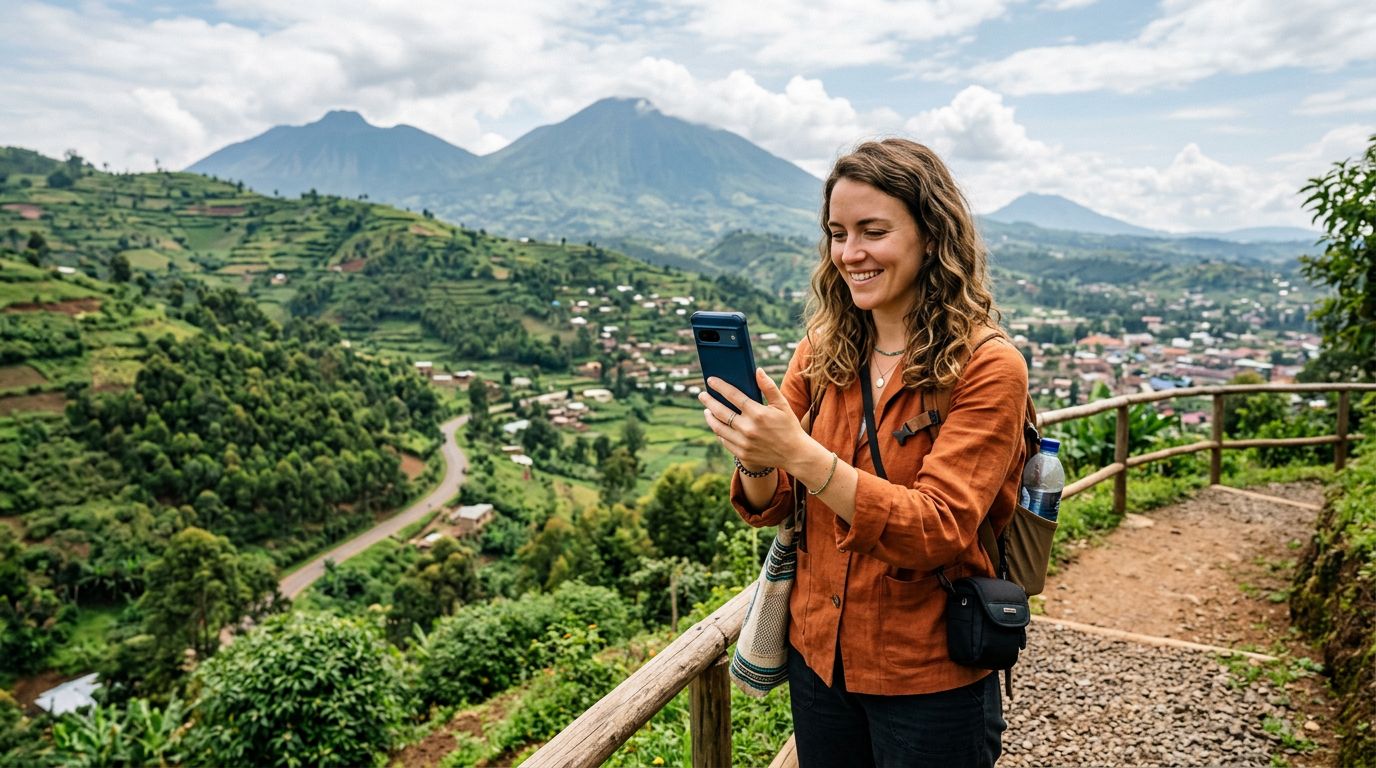
Planning a trip to Rwanda offers the chance to experience incredible landscapes, from the misty peaks of Volcanoes National Park to the vibrant, clean streets of Kigali. Whether you are tracking mountain gorillas or attending a business conference, staying connected is essential for navigation, translation, and sharing your journey. When you start researching how to stay online, you will likely encounter two primary paths: traditional international roaming through your home carrier or using a travel eSIM.
International roaming is the method most travelers are familiar with. It involves using your existing SIM card while abroad, allowing your home provider to connect to a local network partner in Rwanda. While this is undeniably convenient because you do not have to change any hardware, it often comes with significant drawbacks. The most prominent issue is the lack of transparency regarding connectivity quality and the risk of unexpected service interruptions. Because you are relying on your home carrier’s roaming agreements, you are effectively a guest on a network that may prioritize local subscribers or other roaming partners over you.
On the other hand, an eSIM—or embedded SIM—is a digital version of a physical SIM card. Instead of inserting a plastic chip into your phone, you download a data plan directly to your device. This technology has transformed how international travelers manage connectivity. By using a service like OneTapSIM, you can provision a local data profile before you even board your flight. This allows your phone to connect to Rwandan networks as if you were a local user, often providing a more stable and reliable experience compared to traditional roaming.
Comparing the Pros and Cons of Roaming vs eSIM for Rwanda Trip
When weighing roaming vs eSIM for Rwanda trip planning, the differences become clear once you look at how each service handles data management and network access.
Traditional roaming requires you to keep your primary SIM card active. If you are not careful with your settings, your phone might automatically download large software updates, sync cloud backups, or allow background apps to consume data. This can lead to massive service charges or the rapid depletion of any high-speed data allowance your carrier provides. Furthermore, many home carriers throttle roaming speeds, meaning that even if you have a "fast" connection, your actual browsing experience might feel sluggish.
An eSIM offers a more controlled environment. When you install an eSIM for Rwanda, you essentially treat it as a secondary data line. You can keep your primary SIM active for essential SMS or calls if needed, while directing all your data traffic through the eSIM. This separation is a major advantage. It ensures that your data usage is contained within the specific plan you purchased, eliminating the risk of accidental background data consumption on your home network.
Another factor is network compatibility. Rwanda has made significant strides in digital infrastructure, with strong 4G coverage in urban centers and expanding reach in rural areas. When you use an eSIM, you are often connecting through providers that have direct partnerships with local infrastructure, which can result in lower latency and more consistent speeds. Roaming, by contrast, relies on the specific "handshake" agreements your home carrier has negotiated. If your home carrier only has a roaming agreement with the network that has the weakest signal in a specific region of Rwanda, you are stuck with that connection regardless of which other networks might be stronger nearby.
Practical Steps for a Seamless Rwandan Connectivity Experience
Before you depart, ensuring your device is ready is the most important step. First, verify that your smartphone is carrier-unlocked. If you purchased your phone through a mobile provider, it might be locked to their network, which would prevent you from adding an eSIM profile. You can check your device settings or contact your carrier to confirm the status of your phone.
Once you have confirmed your phone is compatible, the process of setting up a service like OneTapSIM is straightforward. You will receive instructions to scan a QR code or enter a set of manual activation details. This process takes only a few minutes and can be done while you are still at home. By activating the eSIM profile before you leave, you ensure that as soon as your plane touches down at Kigali International Airport, your phone will search for and connect to the local network automatically.
Managing your connectivity while in Rwanda is also simplified with an eSIM. You can monitor your data usage directly through your phone’s settings menu. If you find that you are using more data than expected—perhaps because you are uploading high-resolution photos of your safari or video calling family—you can easily manage your data allocation.
It is also worth noting that using an eSIM does not mean you lose your phone number. Most modern smartphones allow for "Dual SIM" functionality. You can keep your home SIM active for incoming calls or two-factor authentication texts while using the eSIM exclusively for data. This hybrid approach is the gold standard for international travel. It provides the security of keeping your primary number reachable while enjoying the cost-effectiveness and high-speed performance of a local-style data connection.
By choosing an eSIM over traditional roaming, you are opting for a modern, reliable, and transparent way to stay connected. Whether you are navigating the winding roads of the countryside or checking emails from a café in Kigali, having a dedicated data plan ensures that your technology works for you, rather than against you. As you finalize your travel plans, prioritizing a stable data connection will undoubtedly make your time in Rwanda more enjoyable and stress-free.
Get an eSIM for
Plans for the destinations covered in this guide, with instant QR delivery.