Understanding Your Connectivity Options in Brunei
Brunei Darussalam offers a unique travel experience, blending lush rainforests with opulent architecture and serene coastal views. Whether you are visiting the capital, Bandar Seri Begawan, or venturing into the Temburong District, maintaining a reliable internet connection is essential for navigation, translation, and sharing your experiences. When planning your trip, you will likely encounter two primary methods for staying online: traditional international roaming and travel eSIMs.
Traditional roaming involves using your home mobile carrier’s services while abroad. Your phone connects to a local Bruneian network through a partnership agreement established by your home provider. While this is often the default option for many travelers, it is frequently associated with significant complexity regarding billing and data management.
On the other hand, an eSIM—or embedded SIM—is a digital version of a physical SIM card. Instead of inserting a plastic chip into your device, you download a data profile directly to your phone. This technology allows you to switch to a local data provider instantly without needing to visit a physical store or swap out your original SIM card. For travelers heading to Brunei, choosing between these two methods requires an understanding of how each impacts your convenience, device functionality, and overall travel experience.
Comparing Roaming vs eSIM for Brunei
When evaluating roaming vs eSIM for Brunei, the most significant difference lies in the level of control you have over your connection. Traditional roaming is often "set it and forget it," but this convenience comes with a lack of transparency. Many travelers find that their home carriers do not provide clear, real-time updates on data usage while abroad. This can lead to unexpected connectivity limitations or throttled speeds once a certain threshold is reached. Furthermore, relying on your home carrier means you are tethered to their specific network agreements within Brunei, which may not always offer the best coverage in remote areas.
An eSIM offers a more modern approach. By opting for a service like OneTapSIM, you gain the ability to manage your data usage through a dedicated digital interface. Because an eSIM acts as a secondary line on your device, you can keep your primary SIM active for essential calls or SMS from home while using the eSIM specifically for high-speed data. This dual-SIM functionality is a major advantage for travelers who need to stay reachable on their primary number while simultaneously using maps, ride-sharing apps, or social media platforms throughout their stay in Brunei.
Another factor to consider is the installation process. Traditional roaming requires no action on your part, but it often requires you to contact your carrier before departure to ensure international services are enabled. If you forget this step, you might arrive in Brunei with no service at all. An eSIM, conversely, can be set up before you even leave your home country. You simply scan a QR code or follow the installation steps provided by your eSIM provider, and the data plan activates the moment your phone detects a compatible network in Brunei. This eliminates the stress of searching for a local kiosk or dealing with carrier support lines upon arrival.
Why eSIM is the Preferred Choice for Modern Travelers
The shift toward eSIM technology is driven by the desire for flexibility and reliability. When you choose an eSIM for your trip to Brunei, you are essentially choosing a local-style connection without the logistical hurdles of purchasing a physical local SIM card. Physical SIM cards often require you to present your passport at a retail location, navigate language barriers, and physically handle tiny hardware that is easy to lose. With a digital solution, your connectivity is managed entirely through software.
OneTapSIM provides a streamlined experience that caters to the needs of international travelers. By utilizing an eSIM, you avoid the risk of losing your home SIM card, which is a common issue when swapping physical cards in and out of your device. Additionally, if your travel plans change or you decide to extend your stay in Brunei, you can often manage your data needs directly from your phone. This level of autonomy is rarely available with traditional roaming, where you are often locked into the policies and limitations of your home provider.
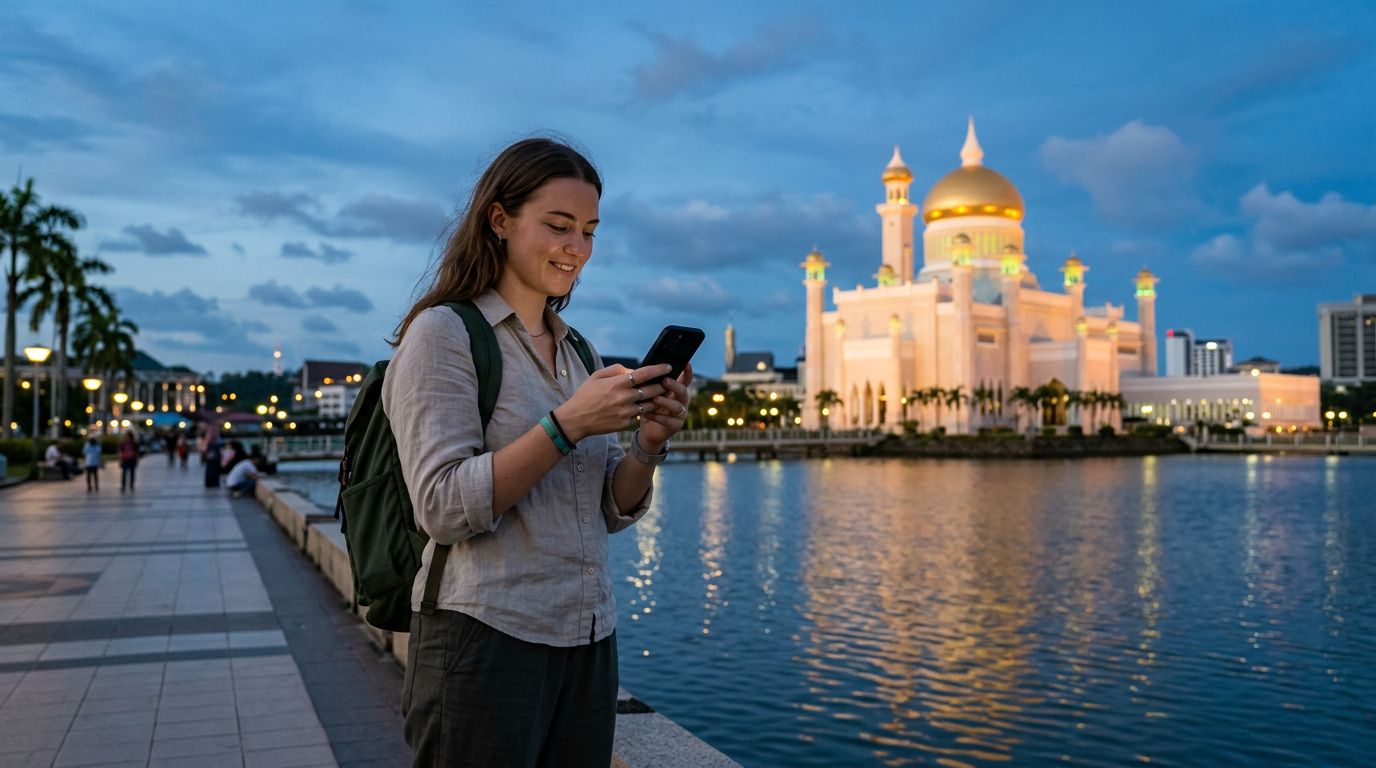
Furthermore, the integration of eSIM technology with modern smartphones is seamless. Most devices manufactured in the last few years are designed to handle multiple eSIM profiles, allowing you to store a plan for Brunei alongside plans for other countries you may visit in the future. This makes it an ideal solution for frequent travelers or those embarking on multi-country itineraries. By keeping your primary SIM active, you ensure that you never miss an important two-factor authentication code or an urgent message from home, while the eSIM handles all your data-heavy tasks like streaming, uploading photos, or using GPS navigation to explore the Sultan Omar Ali Saifuddien Mosque or the Kampong Ayer water village.
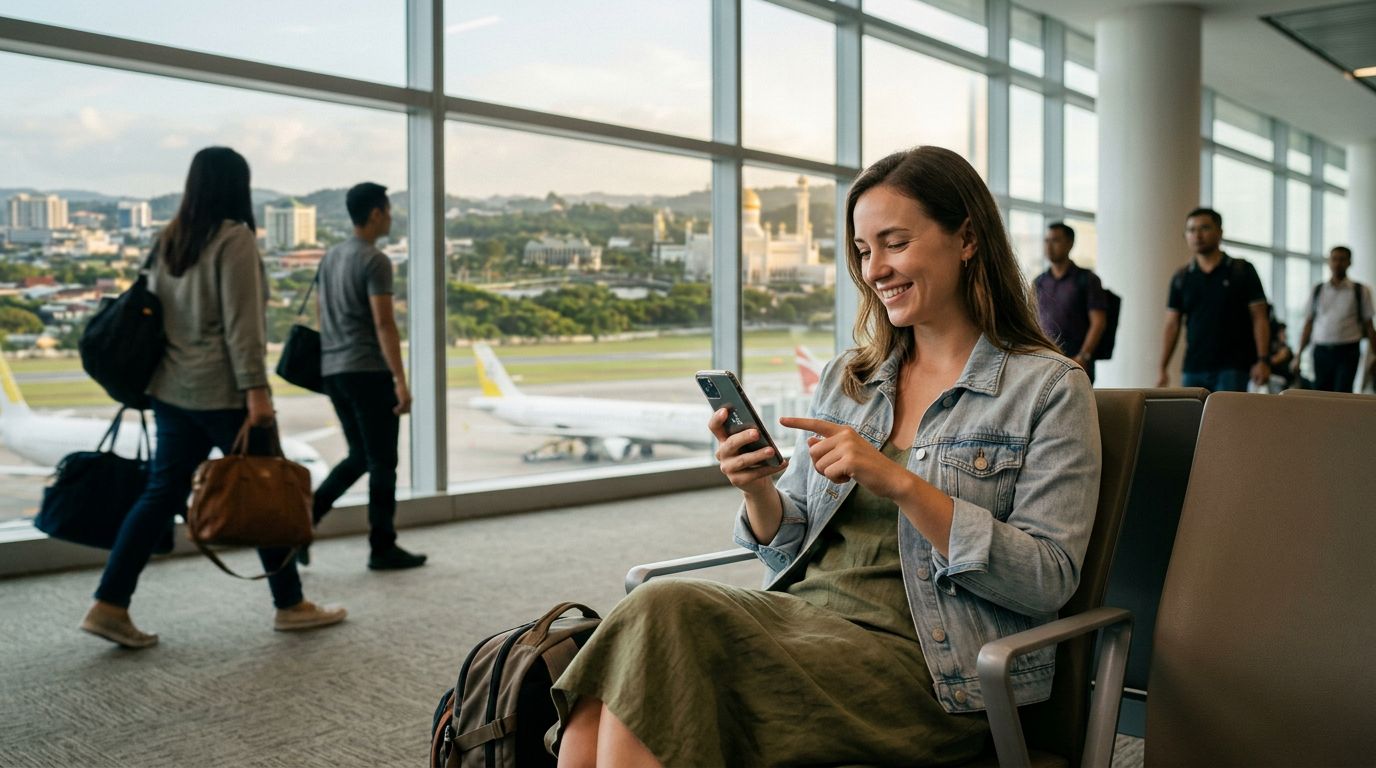
Ultimately, the choice between roaming and an eSIM comes down to how much you value control and efficiency. While roaming might seem easier due to its passive nature, the flexibility, cost-predictability, and technical advantages of an eSIM make it the superior choice for most visitors to Brunei. By preparing your device with a reliable eSIM before you land, you ensure that your focus remains on the beauty and culture of Brunei rather than on troubleshooting connectivity issues or worrying about the status of your mobile service. Whether you are a solo traveler or exploring with family, having a dedicated data plan ready to go ensures a smooth and connected journey from the moment you step off the plane.
Get an eSIM for
Plans for the destinations covered in this guide, with instant QR delivery.