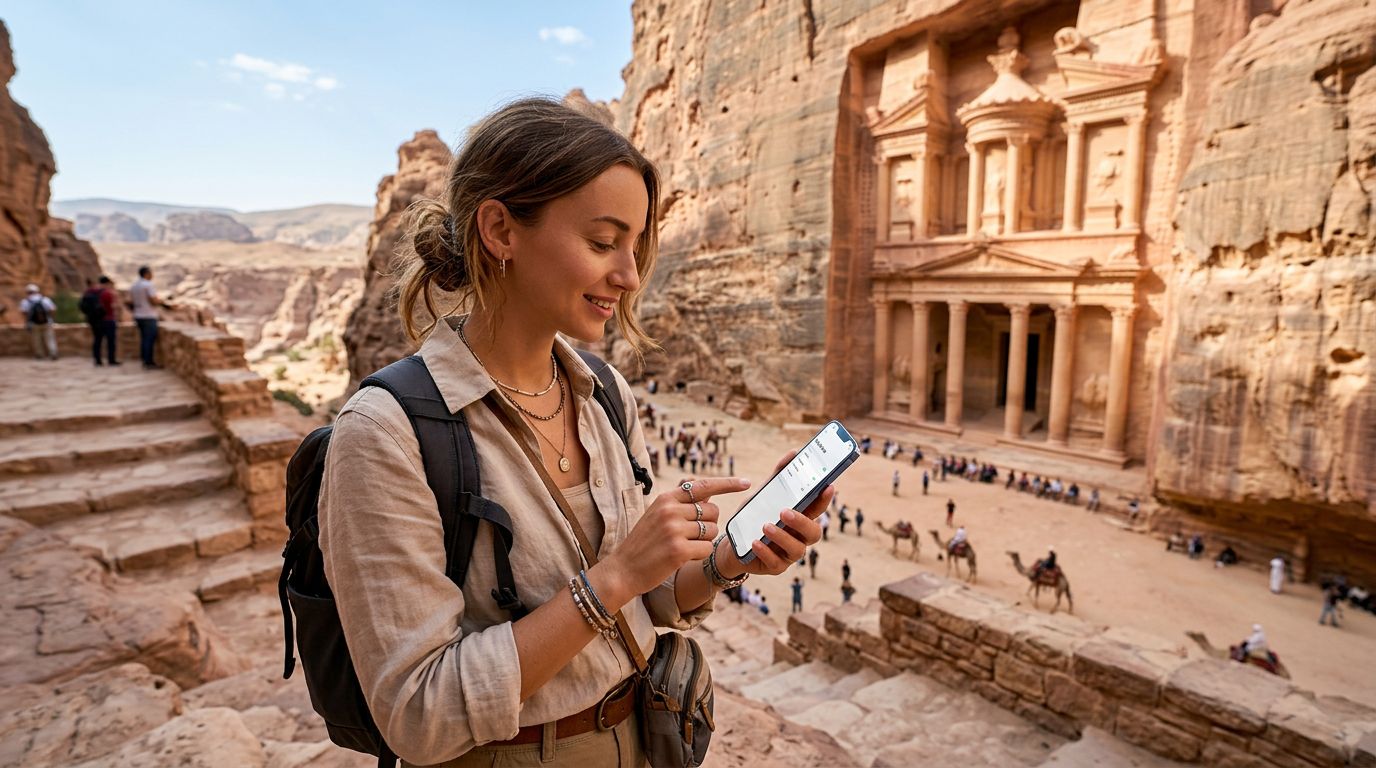
Traveling to Jordan offers a breathtaking experience, from the rose-red city of Petra to the vast, otherworldly landscapes of Wadi Rum. As you plan your itinerary, ensuring you have reliable connectivity is essential for using navigation apps, translating local signs, or sharing your travel memories. When deciding between a physical Jordan SIM card vs eSIM, travelers often find themselves weighing convenience against traditional methods.
Understanding the Differences in Connectivity
A traditional physical SIM card is a small, removable chip that you insert into your phone. When you arrive in Jordan, you typically head to a kiosk at the airport or a local mobile shop in Amman. You present your passport, choose a plan, and manually swap your home SIM card for the local one. While this method has been the standard for decades, it involves keeping track of your original SIM card to ensure you do not lose it during your travels.
An eSIM, or embedded SIM, is a digital alternative. Instead of a physical chip, the SIM profile is downloaded directly to your device via an internet connection. This technology is becoming the standard for modern travelers because it eliminates the need to open your phone’s SIM tray or visit a physical store. With a service like OneTapSIM, you can set up your connection before you even board your flight, ensuring that you have a signal the moment your plane touches down at Queen Alia International Airport.
The primary difference lies in the setup process and device compatibility. Physical SIMs work in almost any unlocked phone, regardless of age. eSIMs require a device that supports the technology, which includes most smartphones released in the last few years. Before choosing your method, check your phone’s settings or manufacturer documentation to confirm it is eSIM-compatible.
Why Travelers are Choosing eSIMs for Jordan
The shift toward digital connectivity is driven by the desire for a seamless travel experience. When you land in a new country, the last thing you want to do is stand in a long queue at a mobile provider’s desk after a tiring flight. By using an eSIM, you avoid the language barriers and potential confusion that can occur when trying to purchase a plan in a foreign country.
Security is another significant advantage. Physical SIM cards are small and easily misplaced or damaged during the swapping process. If you lose your home SIM card, recovering your primary phone number can be a major headache. With an eSIM, your physical SIM remains safely tucked inside your phone, untouched. This reduces the risk of hardware damage to your SIM tray and keeps your home number active for important SMS verifications or banking alerts if your carrier supports dual-SIM standby.
Flexibility is perhaps the greatest benefit for those visiting multiple regions. If you are starting your trip in Jordan and then heading to a neighboring country, you can manage your data profiles through your phone’s settings without needing to find a new vendor at every border. OneTapSIM provides a streamlined interface for managing these profiles, allowing you to switch between data plans with a few taps. This is particularly useful for travelers who prefer to keep their travel data separate from their primary mobile plan, making it easier to monitor usage and avoid unexpected roaming charges from their home provider.
Practical Steps for a Smooth Connection
To get the most out of your connectivity in Jordan, preparation is key. First, ensure your smartphone is unlocked. Many mobile carriers lock devices to their network, which prevents the use of foreign SIMs or third-party eSIMs. If your phone is locked, contact your home carrier to request an unlock before you leave home.
If you decide on an eSIM, the process is straightforward. You will receive a QR code or an activation link after purchasing your plan. You can scan this code to add the plan to your phone’s cellular settings. Many travelers find it helpful to install the eSIM while still at home using a stable Wi-Fi connection. Once installed, the plan remains inactive until you arrive in Jordan and turn it on. This allows you to land, switch your data settings to the new eSIM, and start browsing immediately.
If you choose a physical SIM card, be prepared for the registration process. Jordanian law requires mobile providers to register SIM cards using a passport. Always carry your physical passport with you when visiting a store, as a digital copy or a driver’s license is rarely accepted. Keep in mind that airport kiosks may have higher demand and less competitive options compared to shops in the city center, though they offer the convenience of immediate access.
Regardless of which option you choose, monitor your data usage throughout your trip. Jordan’s major cities have excellent coverage, but remote areas like the desert regions of Wadi Rum may have limited signal strength. Having a reliable data plan ensures you can use offline maps or translation tools when you are off the beaten path. By evaluating your specific needs—whether you prioritize the simplicity of a digital setup or the traditional reliability of a physical card—you can ensure your Jordanian adventure remains connected and stress-free. Choosing the right method allows you to focus on the history of the region rather than the logistics of your mobile service.
Get an eSIM for
Plans for the destinations covered in this guide, with instant QR delivery.