Das traditionelle Erlebnis mit der Flughafen-SIM
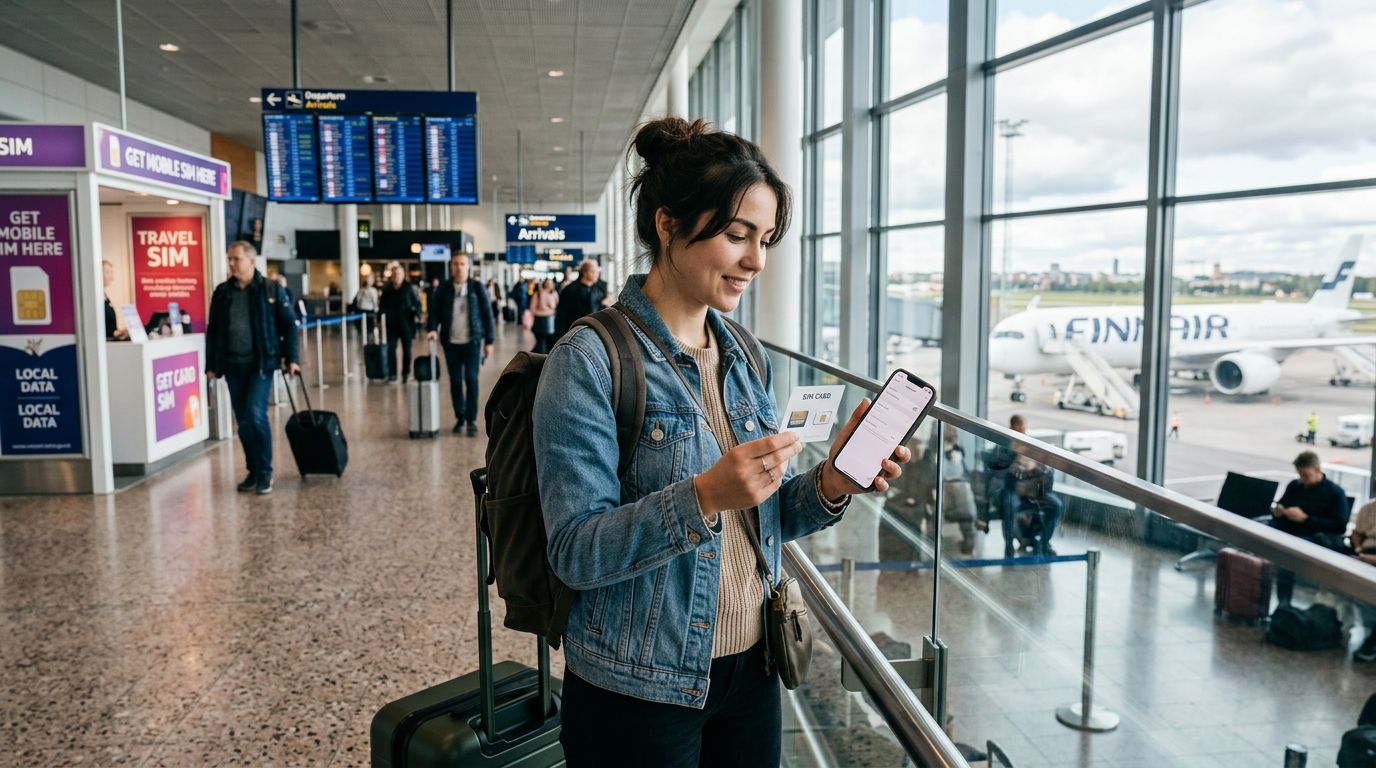
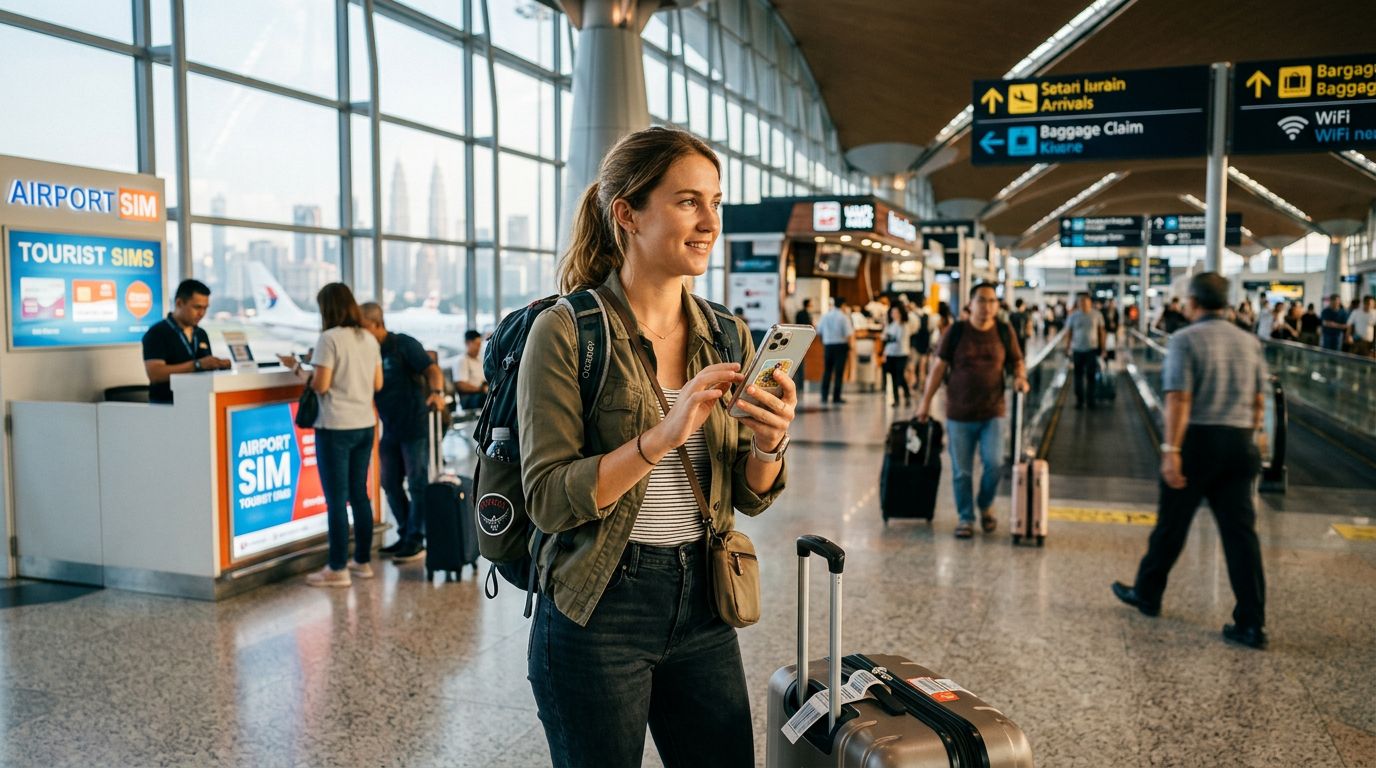
Wenn Sie in einem neuen Land landen, ist das Erste, was Ihnen nach der Zollkontrolle oft auffällt, eine Reihe hell erleuchteter Kioske, die physische SIM-Karten verkaufen. Jahrzehntelang war dies der Standardweg für Reisende, um mobile Konnektivität zu erhalten. Sie gehen zum Schalter, legen Ihren Reisepass vor, wählen einen Tarif und lassen einen Mitarbeiter Ihre heimische SIM-Karte physisch gegen eine lokale austauschen.
Diese Methode hat gewisse Vorteile. Für Reisende, die technisch nicht versiert sind, kann es beruhigend sein, wenn eine Person die Installation übernimmt. Sollte es ein technisches Problem mit der Netzwerkkonfiguration geben, ist der Mitarbeiter direkt vor Ort, um es zu beheben. Zudem schätzen manche Reisende die haptische Erfahrung, eine physische Karte in der Hand zu halten, da sie das Gefühl vermittelt, eine greifbare Verbindung zum lokalen Netzwerk zu haben.
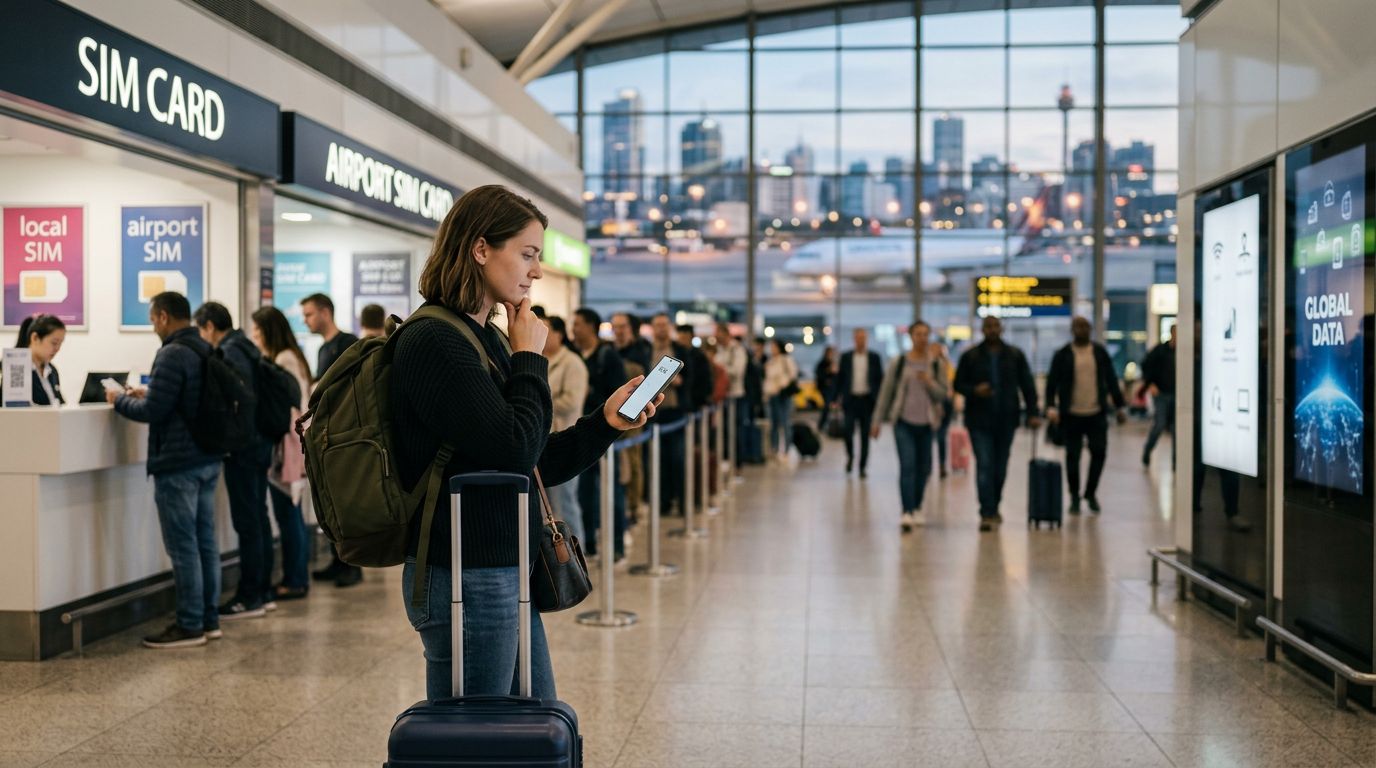
Die Nachteile von Flughafen-SIM-Karten sind jedoch erheblich. Das offensichtlichste Problem ist der Zeitaufwand. Nach einem langen Flug ist das Letzte, was die meisten Menschen tun möchten, in einer Schlange an einem Kiosk zu stehen. Diese Schlangen können unvorhersehbar sein und sich zu Stoßzeiten manchmal über Dutzende von Personen erstrecken. Zudem sind Flughafen-Kioske dafür bekannt, die teuersten Orte für den Kauf mobiler Daten zu sein. Da sie ein gefangenes Publikum von müden Reisenden haben, die sofort Konnektivität benötigen, verlangen sie oft einen Aufpreis im Vergleich zu lokalen Geschäften im Stadtzentrum.
Es gibt auch den logistischen Albtraum der physischen Hardware. Sie müssen Ihre ursprüngliche SIM-Karte entfernen und sicher aufbewahren. Wenn Sie dieses winzige Stück Plastik verlieren, verlieren Sie den Zugriff auf Ihre heimische Telefonnummer, was bei Zwei-Faktor-Authentifizierungscodes, Bankbenachrichtigungen oder dringenden Nachrichten aus der Heimat katastrophal sein kann. Das Hantieren mit physischen Karten, während man gleichzeitig Gepäck und Reisepässe jongliert, ist ein unnötiger Stressfaktor, den viele Reisende lieber vermeiden würden.
Der Aufstieg der eSIM-Technologie
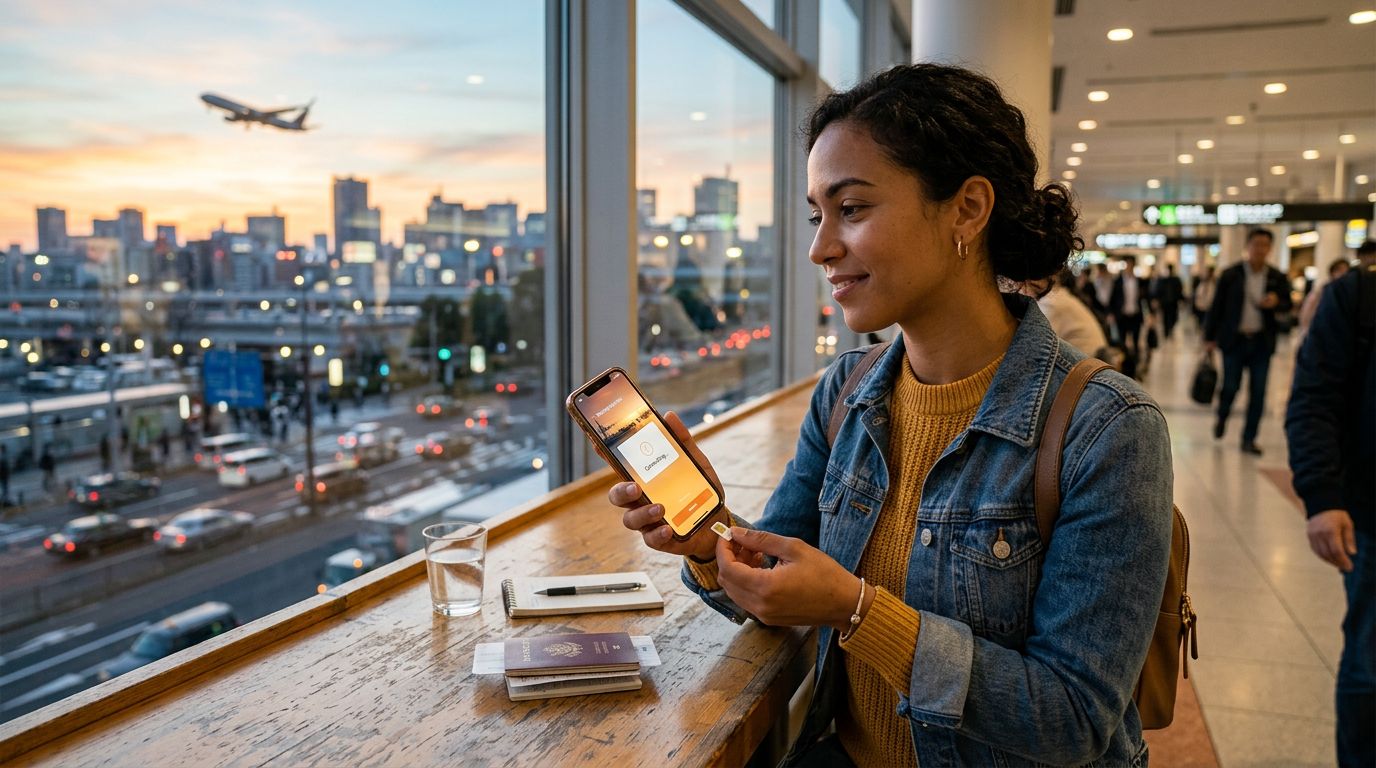
Das Aufkommen der eSIM-Technologie hat die Art und Weise, wie wir internationale Konnektivität angehen, grundlegend verändert. Eine eSIM (embedded SIM) ist eine digitale Version der physischen Karte, die direkt in die Hardware moderner Smartphones integriert ist. Anstatt ein physisches Geschäft aufsuchen oder ein Fach öffnen zu müssen, laden Sie einfach ein Profil auf Ihr Gerät herunter.
Der Hauptvorteil einer eSIM ist die Bequemlichkeit. Sie können Ihren Datentarif bereits Wochen vor Ihrer Abreise einrichten. Sobald Ihr Flugzeug landet, schalten Sie einfach das Daten-Roaming für das eSIM-Profil ein und sind sofort mit dem Internet verbunden. Dies macht es überflüssig, nach einem Kiosk zu suchen, in der Schlange zu warten oder mit einem SIM-Auswurfwerkzeug zu hantieren, während Sie auf Ihrem Koffer in der Ankunftshalle sitzen.
Ein weiterer großer Vorteil ist die Möglichkeit, Ihre heimische SIM-Karte aktiv zu lassen. Mit einer eSIM kann Ihr Telefon oft zwei aktive Leitungen gleichzeitig verwalten. Das bedeutet, dass Sie weiterhin Anrufe und SMS auf Ihrer Hauptnummer empfangen können, während Sie Ihre eSIM für datenintensive Aufgaben wie Navigation, Mitfahrgelegenheiten oder das Abrufen von E-Mails nutzen. Dies ist eine massive Verbesserung gegenüber der physischen SIM-Methode, bei der das Entfernen Ihrer heimischen Karte Ihre Hauptleitung für die Dauer der Reise effektiv stummschaltet.
OneTapSIM bietet eine optimierte Möglichkeit, diese digitalen Profile zu verwalten. Durch den Wegfall der Reibungspunkte, die mit physischer Hardware verbunden sind, wird der Prozess zu einer Hintergrundaufgabe statt zu einem Ereignis, das Ihre Reisezeit beansprucht. Da das Profil digital ist, sind Sie nicht auf die spezifischen Anbieter beschränkt, die zufällig einen Stand am Flughafen haben. Sie können das Netzwerk wählen, das die beste Abdeckung und Leistung für Ihr spezifisches Ziel bietet, unabhängig davon, ob der Anbieter eine physische Verkaufsstelle hat.
Vergleich von Bequemlichkeit und Zuverlässigkeit
Wenn man Flughafen-SIM gegen eSIM für Reisen abwägt, läuft die Entscheidung oft auf das Gleichgewicht zwischen Zuverlässigkeit und Benutzerfreundlichkeit hinaus. Physische SIM-Karten sind in dem Sinne zuverlässig, dass es sich um eine bewährte Technologie handelt, aber sie sind anfällig für menschliche Fehler bei der Installation und das Risiko des physischen Verlusts. eSIMs sind in Bezug auf die Netzwerkleistung ebenso zuverlässig, da sie sich mit denselben lokalen Sendemasten verbinden wie physische SIMs, bieten jedoch ein viel höheres Maß an Benutzerkontrolle.
Sicherheit ist ein weiterer Faktor, den es zu berücksichtigen gilt. Wenn Sie eine SIM-Karte an einem Flughafen-Kiosk kaufen, geben Sie Ihren Reisepass an einen Fremden weiter und erlauben ihm, Ihr Gerät zu handhaben. Obwohl die meisten Anbieter seriös sind, besteht immer ein geringes Risiko, wenn man sein Telefon und seine persönlichen Ausweisdaten in einer stark frequentierten, öffentlichen Umgebung aus der Hand gibt. Bei einer eSIM wird der gesamte Prozess über die sicheren Einstellungen Ihres Geräts abgewickelt. Sie behalten während des gesamten Einrichtungsprozesses die Kontrolle über Ihre Daten und Ihre Identität.
Flexibilität ist vielleicht das überzeugendste Argument für den digitalen Ansatz. Wenn Sie in mehrere Länder reisen, wird eine physische SIM-Karte zur Belastung. Sie müssten an jeder Grenze eine neue Karte kaufen, einen neuen Kiosk finden und den Einrichtungsprozess wiederholen. Mit einer eSIM können Sie mehrere regionale oder globale Tarife über eine einzige Schnittstelle verwalten. Sie können zwischen Netzwerken wechseln oder spontan mehr Daten hinzufügen, wenn sich Ihr Nutzungsverhalten ändert.
Für diejenigen, die Effizienz priorisieren, ist die Wahl klar. Das Modell der Flughafen-Kioske gehört in eine Ära des Reisens, in der Konnektivität ein zweitrangiges Anliegen war, um das man sich bei der Ankunft kümmern konnte. Heute ist Konnektivität für alles unerlässlich, von der Buchung von Transportmitteln bis zur Übersetzung von Speisekarten. Indem Sie Ihre Verbindung vor der Abreise über einen Dienst wie OneTapSIM vorbereiten, stellen Sie sicher, dass Ihre Reise reibungslos beginnt. Sie vermeiden den Stress in der Ankunftshalle des Flughafens und gewinnen die Gewissheit, dass Sie in dem Moment verbunden sind, in dem Sie landen. Egal, ob Sie ein häufiger Geschäftsreisender sind oder ein Urlauber, der seine Zeit optimal nutzen möchte, der Übergang zur digitalen Konnektivität ist ein logischer Schritt zu einem nahtloseren Reiseerlebnis.